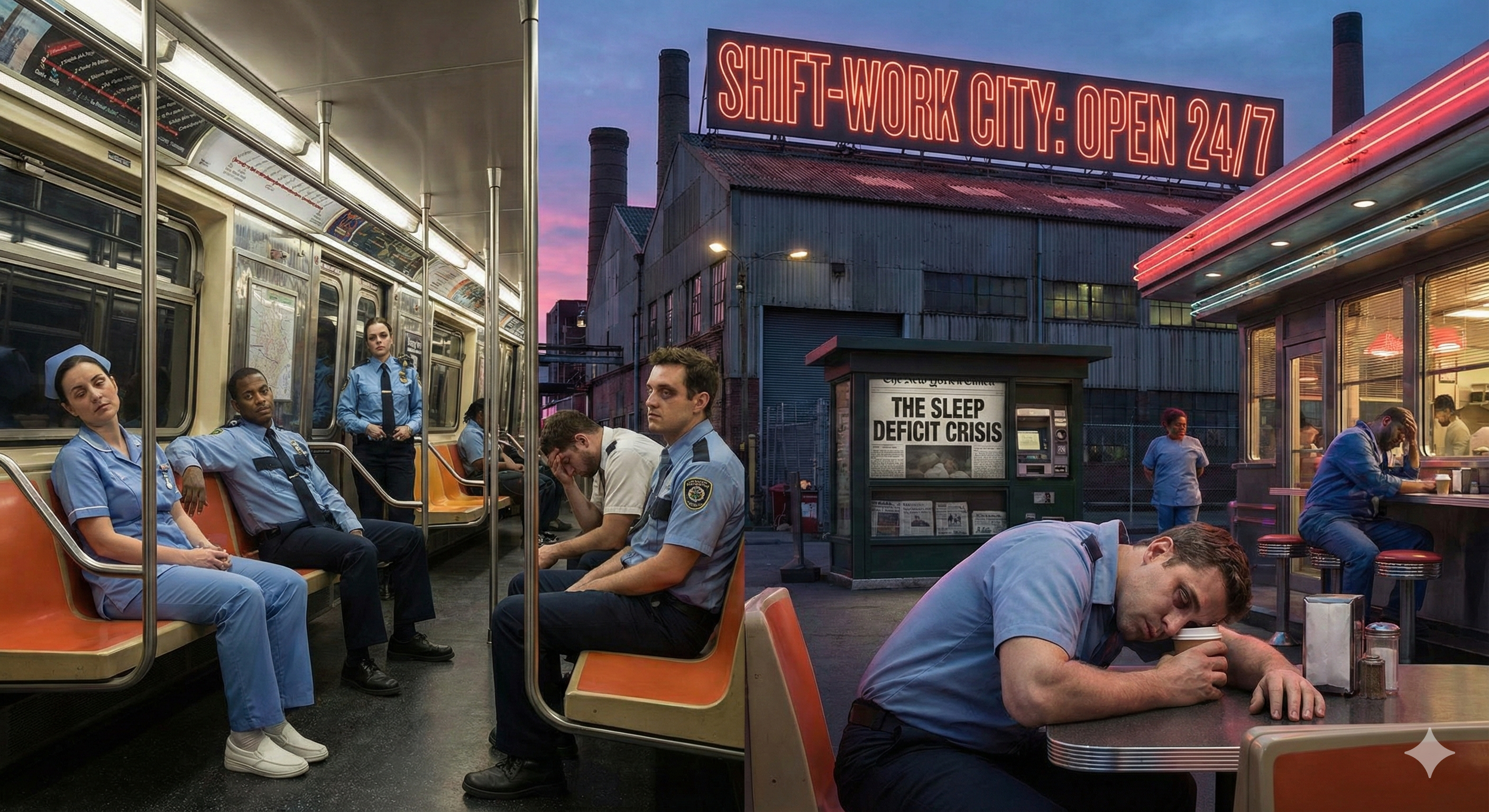

In the relentless engine of our modern, globalized world, the sun never sets on productivity. From healthcare and transportation to manufacturing and digital services, the shift-work society keeps the wheels turning around the clock. This model powers our convenience, sustains critical infrastructure, and fuels economic growth. Yet, beneath the surface of this non-stop operation lies a silent and pervasive public health crisis: chronic sleep deprivation among shift workers. This systemic issue erodes health, compromises safety, and exacts a heavy toll on individuals and societies alike.
Understanding the Biological Betrayal: Circadian Rhythm Disruption
At the heart of shift work sleep disorder is a fundamental clash between work schedules and human biology. Our bodies operate on a circadian rhythm, an internal 24-hour clock regulated by the suprachiasmatic nucleus in the brain. This master clock is exquisitely tuned to the natural light-dark cycle, orchestrating the release of hormones like melatonin (for sleep) and cortisol (for wakefulness).
Night shifts, rotating schedules, and early morning starts force a misalignment between this ingrained biological rhythm and required sleep-wake times. When a night worker tries to sleep during the day, they are fighting against elevated cortisol levels, suppressed melatonin, and environmental cues like sunlight and noise. The result is severely fragmented, short, and poor-quality sleep. The sleep deficit accumulates over time, leading to a state of chronic sleep deprivation, even if the worker has “adapted” subjectively.
The Multifaceted Impact: Health, Safety, and Society
The consequences of chronic sleep deprivation extend far beyond mere tiredness. They infiltrate every aspect of a worker’s life and ripple out into society.
The Physical Health Toll
- Cardiometabolic Diseases: Shift work is a recognized risk factor for a host of serious conditions. Disrupted circadian rhythms impair glucose metabolism and increase insulin resistance, raising the risk of Type 2 diabetes. Studies consistently show higher rates of hypertension, elevated cholesterol, and cardiovascular disease, including heart attacks and strokes, among shift workers.
- Weakened Immune Function: Sleep is crucial for immune regulation. Chronic deprivation leads to a state of systemic inflammation and reduces the body’s ability to fight infections, making workers more susceptible to illnesses from the common cold to more severe conditions.
- Cancer Risk: The World Health Organization’s International Agency for Research on Cancer has classified shift work that involves circadian disruption as “probably carcinogenic to humans.” This link is particularly strong for breast and prostate cancer, potentially due to the suppression of melatonin, which has anti-tumor properties.
- Gastrointestinal Issues: Eating at night, when the body’s digestive system is less prepared, contributes to higher rates of peptic ulcers, acid reflux, and irritable bowel syndrome.
The Mental and Cognitive Consequences
- Mood Disorders: The risk of depression and anxiety is significantly elevated in shift workers. The constant fatigue, social isolation, and biological stress create a perfect storm for deteriorating mental health.
- Cognitive Decline: Sleep is essential for memory consolidation and cognitive repair. Chronic deprivation impairs attention, vigilance, working memory, and decision-making abilities. Some long-term studies suggest it may even accelerate neurodegenerative decline.
- Social and Relational Strain: Living out-of-sync with family and friends leads to social isolation, missed family events, and strained relationships, compounding stress and reducing overall life satisfaction.
The Safety and Economic Cost
- Workplace Accidents: Impaired alertness and microsleeps (brief, involuntary episodes of loss of attention) are a major cause of industrial accidents. The disasters at Chernobyl, Three Mile Island, and the Exxon Valdez oil spill all occurred during night shifts, with sleep-related errors cited as contributing factors.
- Road Safety: Drowsy driving is as dangerous as drunk driving. A shift worker commuting home after a long night shift is at a drastically higher risk of causing or being involved in a motor vehicle accident.
- Economic Burden: The costs are staggering, stemming from increased healthcare utilization, higher absenteeism and presenteeism (being at work but unproductive), elevated worker compensation claims, and costly errors or accidents. The productivity loss alone amounts to billions annually for national economies.
Who Bears the Burden? The Equity Dimension
The impact of shift-work sleep deprivation is not felt equally. It disproportionately affects lower-income workers in essential but often undervalued sectors: manufacturing, warehousing, retail, security, and transportation. These individuals frequently have less schedule control, limited access to healthcare, and fewer resources to mitigate the effects. Furthermore, for many, leaving a shift-work job is not a viable financial option, creating a cycle of health erosion. This represents a significant occupational health equity issue that demands targeted attention.
Building a Path Forward: Systemic and Individual Solutions
Addressing this crisis requires a multi-pronged approach that moves beyond blaming individual workers for “poor sleep hygiene” and focuses on systemic change.
Organizational and Policy-Level Interventions
- Schedule Design: Implement evidence-based scheduling. Forward-rotating schedules (morning → evening → night) are better tolerated than backward rotations. Avoid excessively long shifts (over 12 hours) and consecutive night shifts (more than 3-4). Ensure sufficient rest periods (at least 11 hours) between shifts.
- Provide Health Resources: Companies must recognize sleep deprivation as a serious occupational hazard. Offer education programs on sleep health, provide access to dark, quiet rest spaces for breaks, and ensure health insurance covers sleep disorder screenings.
- Embrace Flexibility and Control: Where possible, allow for some degree of worker input or choice in schedules. Greater perceived control can reduce stress and improve coping mechanisms.
- Regulatory Action: Governments should strengthen occupational health and safety guidelines to explicitly address circadian disruption and fatigue risk management, much like regulations for chemical or physical hazards.
Individual Coping Strategies (Within a Supportive System)
While systemic change is crucial, workers can adopt strategies to mitigate risks:
- Strategic Light Exposure: Use bright light lamps during night shifts to promote alertness, and wear blue-light blocking glasses on the commute home to encourage melatonin production.
- Sleep Environment Optimization: Create a cave-like bedroom for daytime sleep: blackout curtains, white noise machines, and a strict “do not disturb” policy with family.
- Strategic Napping: A short nap (20-30 minutes) before a night shift or during a break can improve alertness without causing sleep inertia.
- Mindful Caffeine Use: Use caffeine strategically in the first half of a shift, but avoid it in the hours leading up to planned sleep.
- Prioritizing Sleep on Days Off: While tempting to revert to a normal schedule, maintaining a more consistent sleep-wake time, even on days off, reduces the “jet lag” effects.
Conclusion: Waking Up to the Crisis
The shift-work society is not an inevitable force of nature; it is a human-created system. If we choose to sustain a 24/7 economy, we must consciously and ethically assume responsibility for its human costs. Chronic sleep deprivation among shift workers is not a personal failing but a design flaw in our modern work architecture.
Investing in healthier schedules, better education, and supportive workplaces is not just an ethical imperative—it is an economic and social necessity. It leads to a healthier, more alert, more productive workforce, reduces the burden on healthcare systems, and makes our roads and workplaces safer for everyone.
The time has come to stop glorifying sleepless hustle culture and start valuing restorative sleep as the non-negotiable pillar of health and safety that it is. By realigning our work structures with human biology, we can build a productive society that does not systematically sacrifice the well-being of the millions who power it through the night. The first step toward a solution is to wake up to the profound scale of the problem.


Leave a Reply